Demographic Shifts Driving Variations in Digital Film Genre Access Preferences Worldwide
Dana Butler · Oct 15, 2026
Demographic Shifts Driving Variations in Digital Film Genre Access Preferences Worldwide
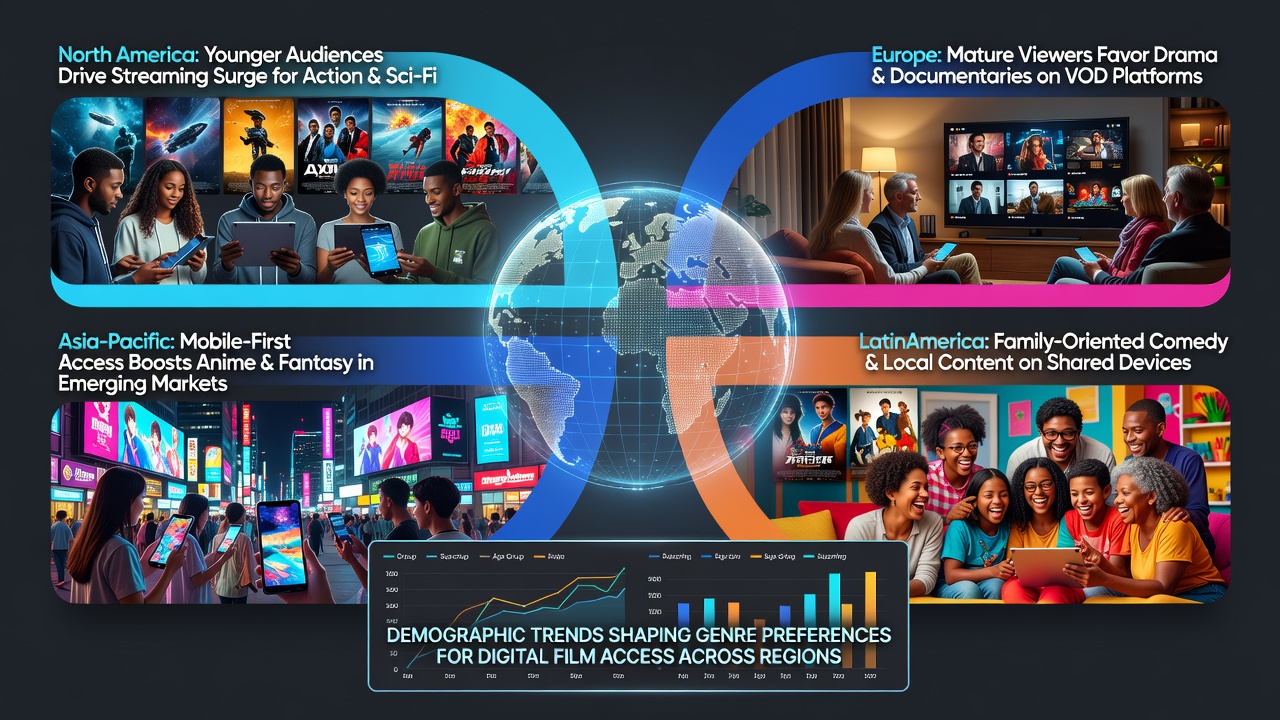
Data from multiple international tracking services shows that age distributions, income levels, and urban versus rural residency patterns continue to shape which film genres gain traction on digital platforms across different regions, with clear divergences emerging between North America, Europe, Asia, and Latin America as of October 2026.
Younger populations in urban centers of Asia demonstrate consistent preference for action and science fiction titles when accessing films through subscription services, while older demographics in European countries lean toward drama and historical content according to aggregated platform usage statistics compiled by the European Audiovisual Observatory. These patterns hold steady even as overall subscription numbers rise, indicating that core demographic variables exert stronger influence than temporary promotional campaigns.
Age and Income as Primary Drivers
Households headed by individuals between 18 and 34 years old allocate a larger share of their viewing time to animated features and fantasy genres in markets such as South Korea and Brazil, whereas viewers aged 50 and above in Canada and Australia show higher engagement with documentaries and biographical dramas. Income brackets further refine these selections, with higher-earning groups in metropolitan areas accessing premium international titles more frequently than lower-income segments that remain within locally produced or dubbed content libraries.
Research conducted across 12 countries reveals that disposable income correlates directly with willingness to pay for niche genre catalogs, yet regional content regulations also play a measurable role in limiting exposure to certain categories regardless of viewer preference.
Regional Variations in Genre Uptake
Across Southeast Asia, comedy and romance titles maintain strong positions among female viewers in the 25 to 44 age range, while male viewers in the same cohort favor thriller and crime dramas according to usage logs from major platforms operating in the region. In contrast, Northern European markets display elevated demand for independent and arthouse films among university-educated populations, a trend documented in reports issued by national media authorities in Sweden and the Netherlands.
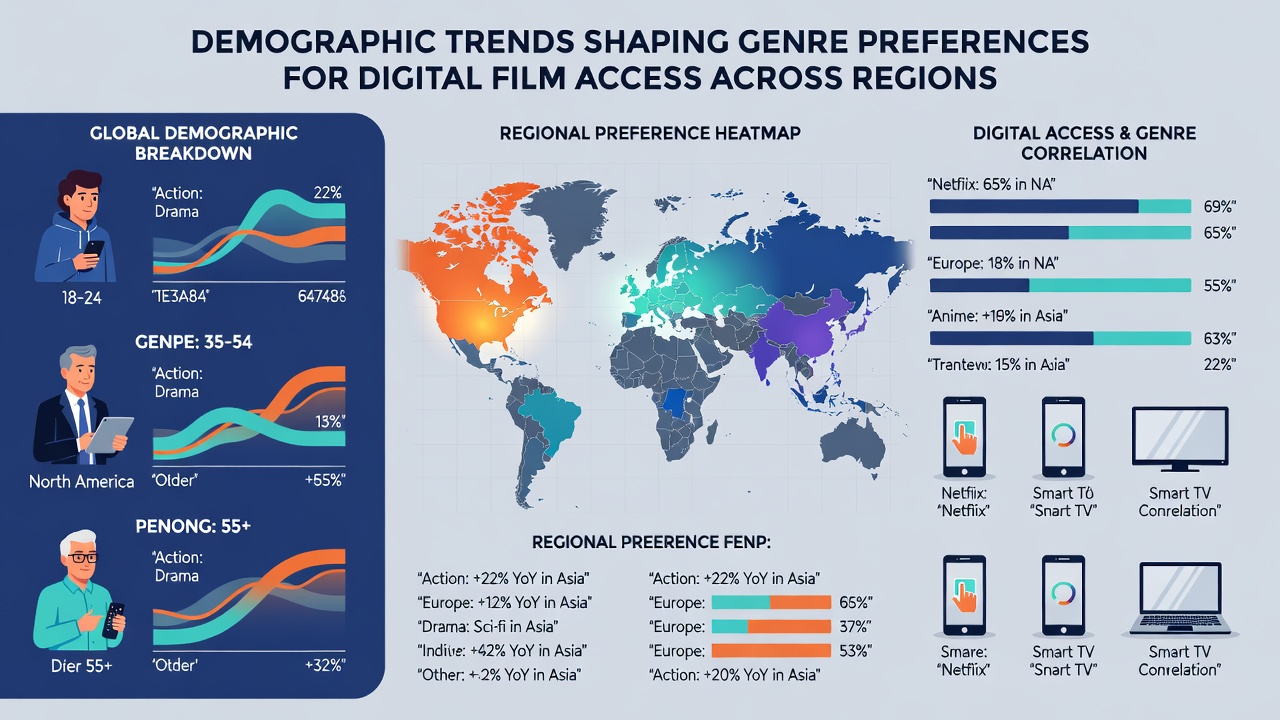
Latin American countries exhibit pronounced interest in family-oriented and musical content among multigenerational households, particularly in suburban and rural zones where shared viewing remains common. North American data indicates that urban minority populations sustain demand for culturally specific dramas and comedies that reflect local community experiences, a pattern tracked through repeated industry surveys conducted by university research centers.
Urban and Rural Divides
Connectivity infrastructure continues to affect genre accessibility, with rural residents in Australia and parts of Eastern Europe encountering narrower selections dominated by mainstream blockbusters because of bandwidth constraints and smaller catalog offerings on regional servers. Urban populations gain earlier exposure to emerging international genres through faster networks and more diverse recommendation algorithms tailored to city-based user clusters.
Studies from Statistics Canada highlight that these infrastructure differences amplify existing demographic preferences rather than override them, resulting in slower adoption of experimental or foreign-language content outside major population centers.
Gender and Cultural Factors
Gender-based differences appear most pronounced in Middle Eastern and African markets where female viewers demonstrate stronger engagement with romantic and social-issue dramas while male viewers prioritize sports-related documentaries and action franchises. Cultural and linguistic preferences intersect with these patterns, leading platforms to adjust subtitle availability and regional promotion strategies accordingly.
Observers tracking platform algorithms note that recommendation engines increasingly incorporate location-specific demographic signals to surface titles that align with observed group behaviors, though these adjustments remain secondary to raw viewership data collected over multiple quarters.
Conclusion
Current evidence points to demographic composition as a stable predictor of genre consumption patterns in digital film access, with age, income, location, and cultural background producing measurable differences across regions. Continued monitoring through October 2026 and beyond will clarify whether these trends intensify or stabilize as platform libraries expand and connectivity improves in previously underserved areas.